Submitted by Jules W
Welcome back to the mystery!
In this blog we meet a Canadian soldier, one who would be stationed in Seaford twice: once as he prepared to go to France and once whilst he waited to be sent back home in 1919.
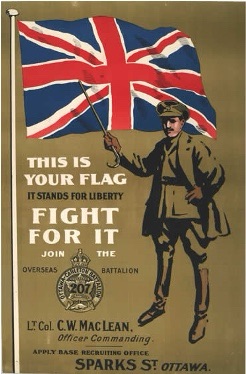
Many Canadian men had enlisted voluntarily at the outbreak of war, 70% of early recruits had recent British connections joining up out of loyalty to the Crown, patriotism and a sense of adventure (i). Also fuelled by propaganda posters, preaching from the pulpits and pressure from home. As the reality of war hit home -rising deaths and casualties the voluntary ‘joining up’ dried up, thus in July 1917 conscription was introduced for all able-bodied men between 25 and 40.
Using Canadian museums, art galleries, blogs and history sites I have pieced together a sense of the men who may have passed through Seaford from 1917 and again in 1919 whilst they waited to go home.
Let’s meet our Canadian soldier, a merger of many pieces of research.
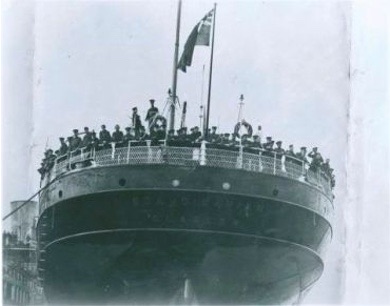
‘Our Soldier’ is of British descent, his family made the crossing from Liverpool to Halifax, Nova Scotia in the 1890’s, he thinks of himself as Canadian. Following 10 weeks of training in Canada he finally boards the SS Scandinavian in August 1917[ii]. After days bored stiff in port, they finally set sail in convoy with other troop ships; he will play deck sports, be seasick for days, play cards, gamble and then listen to the Sunday sermon on the ‘diversions of gambling’.[iii] He will meet men from all over Canada as well as Indigenous Soldiers who he will find fascinating and despite their limited English, he will hope to see them again in England. Roughly two weeks later he will arrive in the UK.
We will pick him up again in South Camp, Seaford. He will be greeted by this fantastic display.
It was customary for the Canadians to decorate the entrance to their camp.
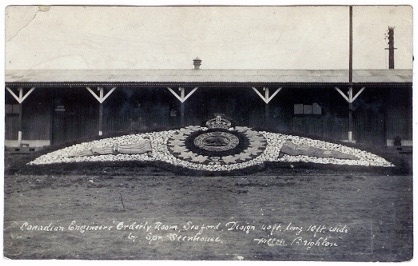
This impressive design was 40 feet long and 10 foot wide! It really seems to show a sense of pride in the place they would call home for a few months.
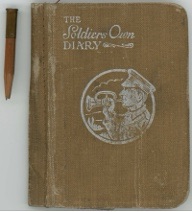
All Canadian Soldiers received a small pocket diary each year, with useful information such as a map of France, compass points, finding your way by day/night, dealing with poisoning and much more (iv).
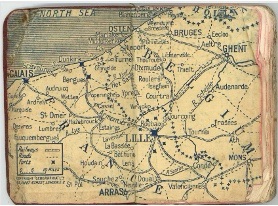
Our solider, tired and travel weary, will look out of the window on his South Camp hut from where he can see a parade ground and more huts, he will be sitting on our ‘unassuming field’ today known as Chyngton Field. [at the base of the open space in the middle of the picture below] He will open his diary and make a brief entry: Seaford Camp. Tired. Headache. Letter from Mother and Sister Emily to read. Weather sunny and bright.
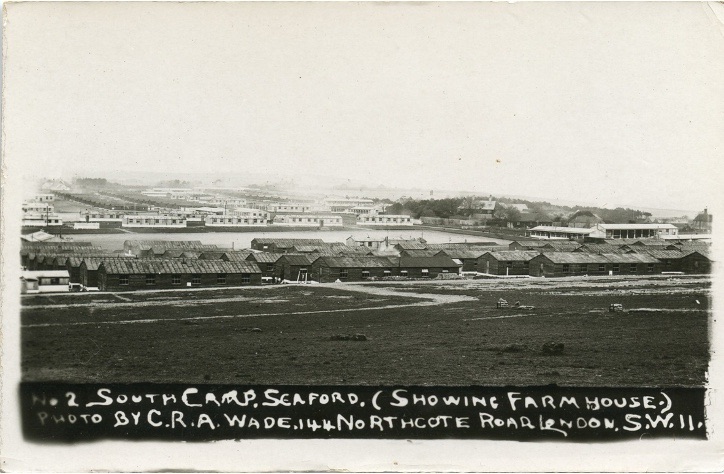
Our Canadian Soldier’ and his pals are tired and weary from their journey; he has been issued with his blanket and will sleep soundly. 08.30 Church, but then free for the afternoon; a few of the men head up to Seaford Head and will be stunned by the view of the white cliffs shimmering in the sun, and the expanse of Seaford Bay, later writing home with some enthusiasm about it. In the distance, towards Newhaven, the sea planes can be seen taking off, ‘Our Solider’ is fascinated. He’s been told that on quiet nights with the wind in the right direction he will hear the guns from the battlefields in France. He could be there in weeks.
‘Our Canadian Soldier’ will come to the cliffs, when time allows, he finds it clears his head and gives him space to steady both his anger and nerves as the reality of what’s ahead hits home. He wonders why he’s here, after all, his family migrated to find a better life in Canada, yet they still encouraged him to join up and fight for a country they had chosen to leave. If he had ignored them, he would still be in Canada as the new Military Service Act specified from 20 years old and he was 19. Deep down he felt cross that he had been swept up in the recruitment drive. He knew that being a ‘reservist’ meant he was replacing someone who had died or was so badly injured that they could not be sent back. He hated the term ‘reservists’ and felt it should be renamed as filling a dead man’s shoes.
The reality was depressing.
‘Our Canadian Soldier’ would soon find out that the English knew very little about the Canadians, probably having read too many novels and seen too many silent movies where they were portrayed as the Canadian Mounties, or trappers, tough adventurers who battled the elements in the depth of a snowy Canadian winter. The truth was most were from the urban sprawl, signing up through unemployment and other pressures. However, a few months before his arrival at Seaford, the Canadians had won a famous victory at Vimy Ridge, all four divisions fighting together, this would cement their reputation as tough troops who would deliver. Of course, the cost was high. 3,500 killed and 7,000 injured. This was a tough act to follow.
[below is the vast, imposing memorial at Vimy Ridge opened in 1936]
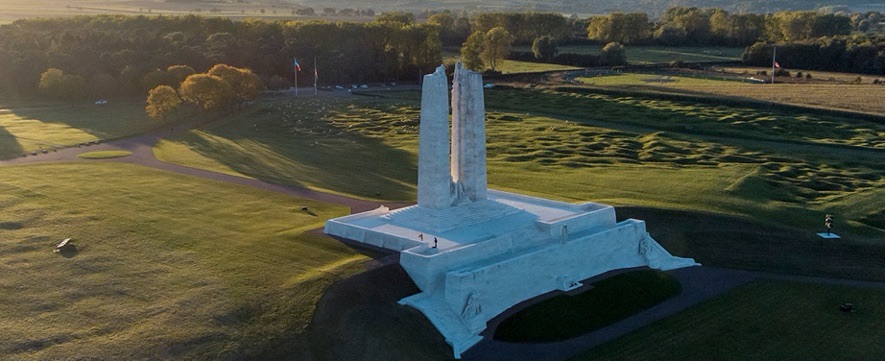
So, day one and he’s settled in. The next week is spent on route marches, as the commanding officer considers they’ve all gone ‘soft’ after the sea journey. In the heat of the summer sun they will go to Alfriston and back. He will record in his diary doing 140 steps per minute; his feet were not impressed.
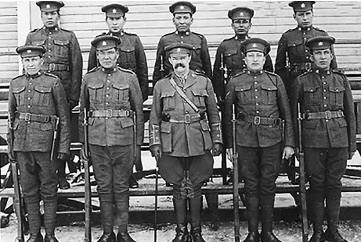
In the YMCA the next day his spirits are lifted as he sees the Indigenous Soldiers from the ship, he and his friends enjoy their company, they will show everyone up at firing range practice, leaving ‘Our Soldier’ in total awe of their accuracy. These men will become snipers or reconnaissance scouts, some of the most hazardous roles in the military (v)
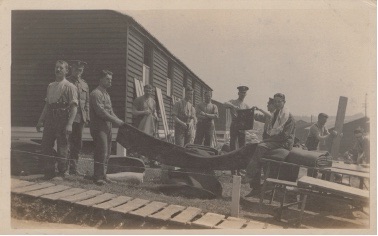
The days will merge as the summer progresses to early Autumn, one round of route marching to strengthen the men, fatigues, hut inspections, machine gun and rifle practice, but worst of all, the Gas Chamber.
All the soldiers knew about the potential for Gas Attacks on the Western Front, The Canadians had been amongst the first to face it in Ypres 1915[vi] the officers and the Sunday sermons here at camp, reiterated the bravery and price paid by the men holding the lines: The cost was high with some 6,000 Canadians killed, wounded, or burned by gas, but the German attack failed and was repulsed . These reports further cemented the Canadians position as crack troops, which our soldier thought a twist of the truth as everyone he’d met so far had been store clerks, farmers, lumber jacks, bankers, and university students just months before.
After a week of being timed putting on a gas mask, making sure it was sealed, learning about the different gases, one with the smell of pineapple, not that he was sure what pineapple smelt like, the final test of the chamber loomed. Underground, at the far edge of the camp; despite his fear, he found it impossible to stand in the queue outside and not be moved by the incredible view to the Cuckmere River, the sun glistening on the water, the sea and its constant changing shades of blue. Tracing the shape of the river as it meandered to the sea, his thoughts returned to home and he shivered with the realisation that one mistake in France, one stray bullet with his name on and he would be finished. He focussed his eyes on the mouth of the river and prayed as he obeyed the order ‘GAS, GAS’, just managing to fit the mask before being unceremoniously shoved into the pit (vii).
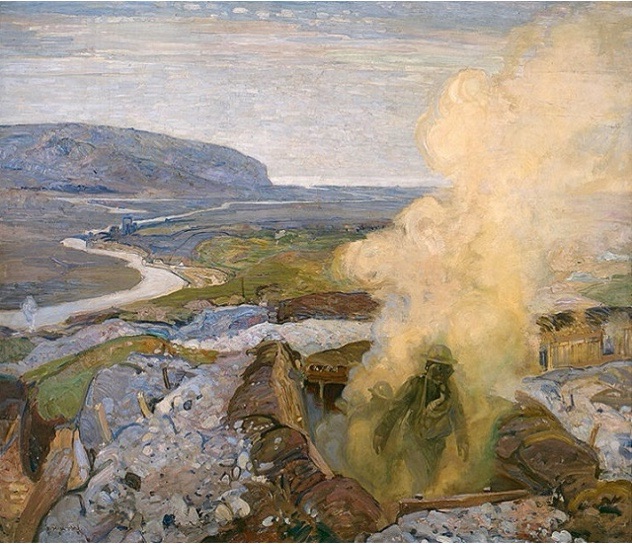
Once inside he tried, oh how he tried, to not panic, the officer in charge had been clear about the potential dangers of taking off the mask. ‘Our Soldier’ could feel his eyes burning, had the mask leaked, had he done it wrong? No-one had checked. He ran out of the chamber, pushing through the other men who had come in after him. Ripping the mask off, he started to shake. Within seconds the officer in charge had slapped him to his senses.
Early evening back at camp, he just wrote in his diary. ‘Gas Chamber- looked a fool. Didn’t pass. Back to the chamber tomorrow’. He felt like crying. His good friend came to the rescue, and they headed for the YMCA, some good company, a good sing song, of Down in our Seaford Camp to lift spirts.
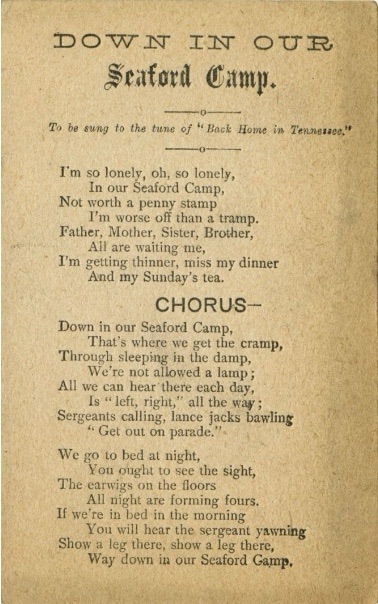
Letters to home and from home were remarkably frequent, Canadian websites indicate letters arrived every few days: the YMCA gave them a place to write, paper and envelopes. Not all soldiers enjoyed their time at Seaford, one remarking that he would send a present if I can get a hold of anything in this blooming hole of a town (ix). Perhaps he would be one of the 1919 soldiers who would cause trouble whilst waiting, not so patiently to go home to Canada.
Early that morning, whilst ‘Our Soldier’ was deep in panic mode, a large contingent of men had left for France, his two Indigenous friends would now be halfway to the battlefields. (x) He hoped their skills of hunting, tracking and accurate sniper shots would protect them.
Tomorrow more would arrive. He sits with his pals, the room busy and bustling, but there is an air of expectation tonight, the rumour is they leave within days. The tea and coffee flow, no alcohol in here, the white mugs a semblance of normality, he likes them, it reminds him of sitting round the kitchen table at home, a large steaming mug of tea in his hand, his mother’s laughter and the smell of a hood stew!
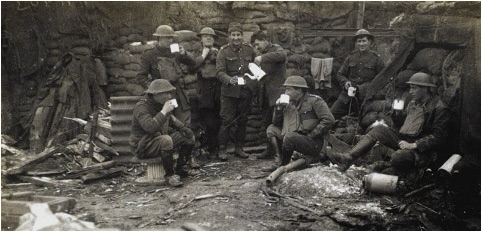
The following week, he will be in a trench in France (xi), sharing a tea in a lull in the fighting: the regulation tin mug reminding him of his last few days with his pals in Seaford.
On his return to Seaford Camp in 1919, having heard the camp would be dismantled he purloined a cup to take home, others would be discarded and one will be found 100 years later, in a Seaford garden, on the land where South Camp stood.
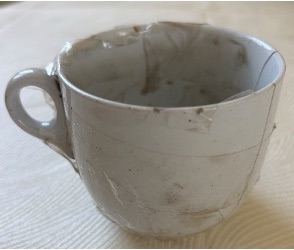
What tales can this mug tell? How many young men took their last tea in the safety of a South Camp hut, how many drunk out of this cup? An ordinary object, the day-to-day routine of men over a hundred years ago. Something so recognisable to us today. A shared heritage.
‘Our Canadian Soldier’ will arrive in France September 1917, by October he will have moved to the Ypres Salient- to Passchendaele in Belgium relieving the Anzac troops who had been there since July. No amount of training will prepare him for the horrors of that encounter which will haunt him for the rest of his life. The ground soaked through weeks of torrential rain, the mud a sticky, sour smelling mess, our soldier will look out on a landscape of grey and black, acres of shell-holes full of water, the dead and the wounded. By November 1917 a victory will have been secured, but at what price?
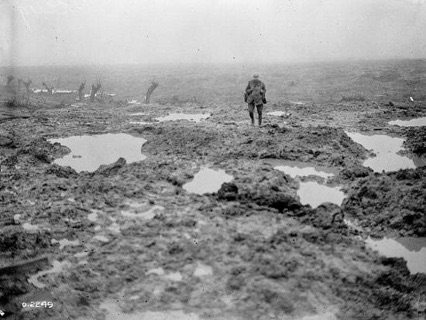
Of the 100,000[xii] Canadians who fought there, 4,000 died, over 12,000 wounded.
Our solider will remain in France, part of the final push of WW1, eventually returning to Seaford in 1919, a very different man to the 19-year-old who left in 1917.
It is not surprising, after all they had been through, that many Canadians, already battle weary and disenchanted were furious to be held in camps, such as Seaford, after the war ended.
There are two possible endings for ‘Our Man’
‘Our Soldier’ may well be one of the men who was caught up in the ‘disturbances’ that spilled out through Seaford during this time, men on half rations, restricted to camp, waiting for the orders to be ready to go home, constantly having the departure date moved, still here after months. Finally released to go home in May 1919, he will live a good life, married with children and ancestors who will find his white cup and diaries. They will be intrigued and visit here to see the Cuckmere River, the sea, the view and to walk in his footsteps.
Or
‘Our Soldier’ may well have come here in early March, battle weary, tired, haunted by nightmares, back to a drafty hut with the wind whistling down the hill from South Barn, tearing through the ill-fitting windows of the huts, under the floors and through the door frames, the brazier in the hut just taking the edge off the cold. He’s run down, desperate to get home, many men are in quarantine as measles and scarlet fever run rampant through the camp. His chest hurts, he coughs a lot, within a few days ‘our man’ has contracted pneumonia and dies from this and Influenza [Spanish Flu]. He is in the CWGC Cemetery in Seaford, having never married he has no direct descendant to remember him and visit his grave.
Seaford should remember them.
(i) https://www.warmuseum.ca/firstworldwar/objects-and-photos/propaganda/recruitment-posters/this-is-your-flag/?back=112 recruitment poster Canada.
(ii) Dates & ship name taken from a variety of diaries on Canadian websites. The Ship may not factually have been transporting in August 1917.
(iii) https://wartimecanada.ca/sites/default/files/2023-08/T.A.%20Payne%20Diary%20%281916%29.pdf paraphrased some extracts from this diary.
(iv) https://wartimecanada.ca/ Diaries from WW1 and more.
(v) https://www.rcaanc-cirnac.gc.ca/eng/1414152378639/1607908713791 I can’t be sure that Indigenous men were at Seaford, it seems likely – some were in usual regiments, whilst others, post 1915 may have joined all-Indigenous units.
(vii) https://www.youtube.com/watch?v=L6PkuSMCUn0 You tube video of American Troops training for a gas attack.
(viii) https://wartimecanada.ca/document/first-world-war/music/down-our-seaford-camp
(ix) https://www.canadianletters.ca/document-5276.html
(x) https://www.veterans.gc.ca/en/remembrance/people-and-stories/indigenous-veterans
(xi) https://collection.nam.ac.uk/detail.php?acc=2004-09-3-16 British Soldiers 1918 sharing tea, rum bottle in the photo probably topped up the tea, had to be drunk in the presence of an officer!
(xii) http://www.veterans.gc.ca/en/remembrance/military-history/first-world-war/battle-passchendaele
This article is copyrighted, it may not be reproduced without the permission of the author.


