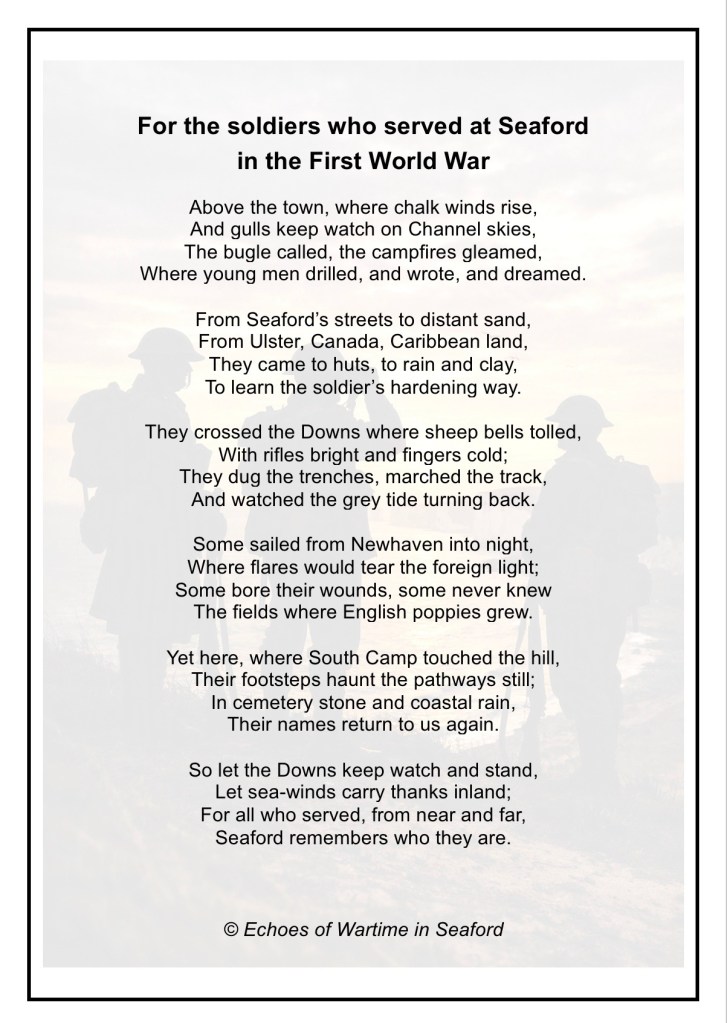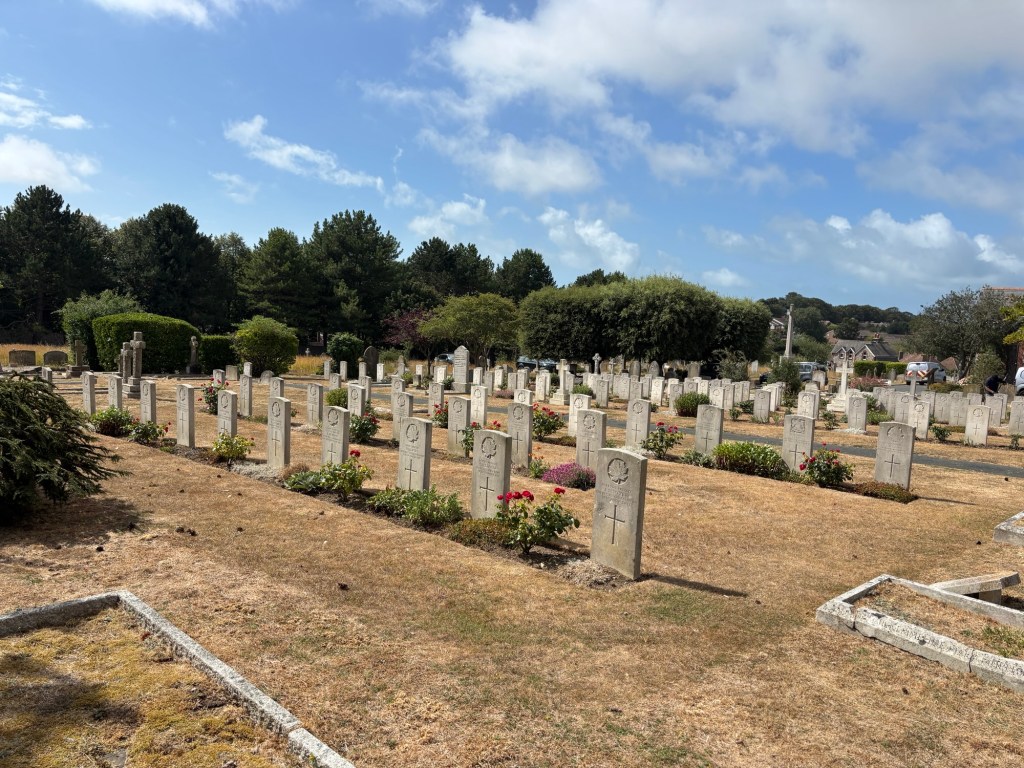
As Remembrance Day approaches you may be interested that Seaford Cemetery accommodates many Commonwealth War Graves. Every year at the cemetery there is a Commonwealth Service of Remembrance in honour of the troops from Canada, Ireland, West Indies and the UK who are laid to rest in graves at Seaford Cemetery. This year the service will take place on Tuesday 10th November from 10:30 am in Seaford Cemetery on the Alfriston Road. Members of the West Indian community in London and representatives from the Canadian High Commission travel to Seaford each year to attend this ceremony. Representatives from The Seahaven Branch of the Royal Society of Saint George, The Royal British Legion, the Commonwealth War Graves Commission along with councillors and officers of Seaford Town Council also attend the service. Everyone is welcome to attend if, they too, would like to pay their respects. This Remembrance Service is distinct from the service which occurs on Remembrance Sunday held at the War Memorial on Sutton Park Road to honour Seaford residents who have served in the Armed Forces.
Following commencement of the First World War and Lord Kitchener’s appeal for men to join up in August 1914, a large training camp was created in Seaford. The camp, which was split into North Camp and South Camp, housed between 15,000 and 18,000 men at any one time. Over 200,000 men would have passed through the camp over the duration of the First World War. Many of these troops came from the Commonwealth including from the British West Indies and Canada, others came from across the United Kingdom.
Some of the men who survived the war were sent back to Seaford camp prior to being sent home and unfortunately succumbed to the flu pandemic. They are buried in the cemetery together with other servicemen who unfortunately suffered accidents or committed suicide whilst in Seaford. These men are all laid to rest in Seaford and their graves are maintained by the Commonwealth War Graves Commission. There are 254 burials in Seaford War Graves Cemetery from the First World War and there are also 25 service burials from the Second World War including six unidentified merchant seaman.
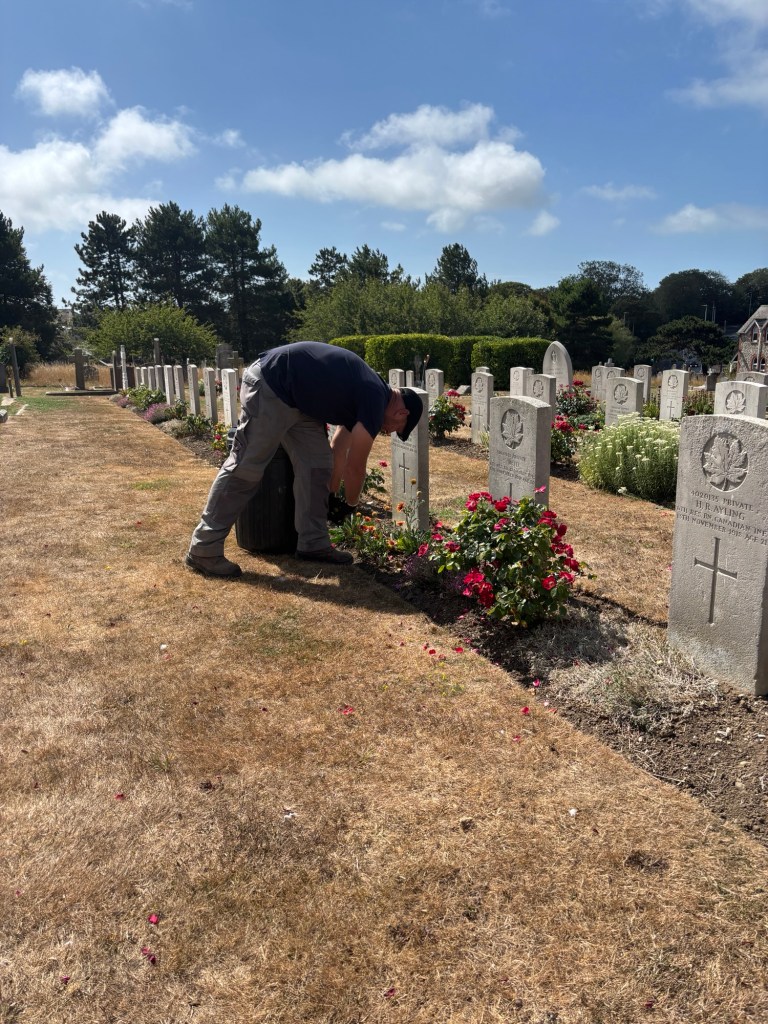
The Commonwealth War Graves Commission (CWGC) was founded in 1917 and is responsible for commemorating all Commonwealth war dead individually and equally. The CWGC works on behalf of the Governments of Australia, Canada, India, New Zealand, South Africa and the United Kingdom to commemorate the 1.7 million men and women from the Commonwealth who lost their lives in the two World Wars. The CWGC maintains such graves across the world, including those, of course, in Seaford. They employ gardeners to cultivate the surroundings of the graves tending plants and flowers and employ stone masons to maintain the headstones.
Sarah Nathanial, the Public Engagement Coordinator (South East) and Education Officer, CWGC explains why the CWGC headstones sometimes need replacing:-
‘The Commonwealth War Graves Commission (CWGC) is responsible for caring for more than a million war graves worldwide, and while our headstones are instantly recognisable, they don’t last forever.
Contrary to what many people assume, the CWGC doesn’t automatically replace ageing headstones. Conservation comes first. Stones are regularly cleaned, repaired and stabilised wherever possible, helping to preserve the original memorials and the history they represent. Many original stones remain in cemeteries and are now over a hundred years old – they are historic objects in and of themselves.
Every war grave is inspected on a rolling cycle by both our Operations Team and our volunteers. Only when a headstone is broken, unstable, or weathered to the point that the casualty’s details can no longer be clearly read will it be replaced.
Even then, replacement is carefully managed. Around 22,000 headstones are renewed each year as part of the Commission’s ongoing maintenance programme. New stones are produced at our main workshop in Beaurains, France, and are made to match the original design and materials as closely as possible.
It’s a largely unseen process, carried out with meticulous care and attention by our Skilled Maintenance Craftsmen, but an important one. By balancing conservation with careful replacement, the CWGC ensures that the names and stories of those who served continue to be visible and remembered for generations to come.’
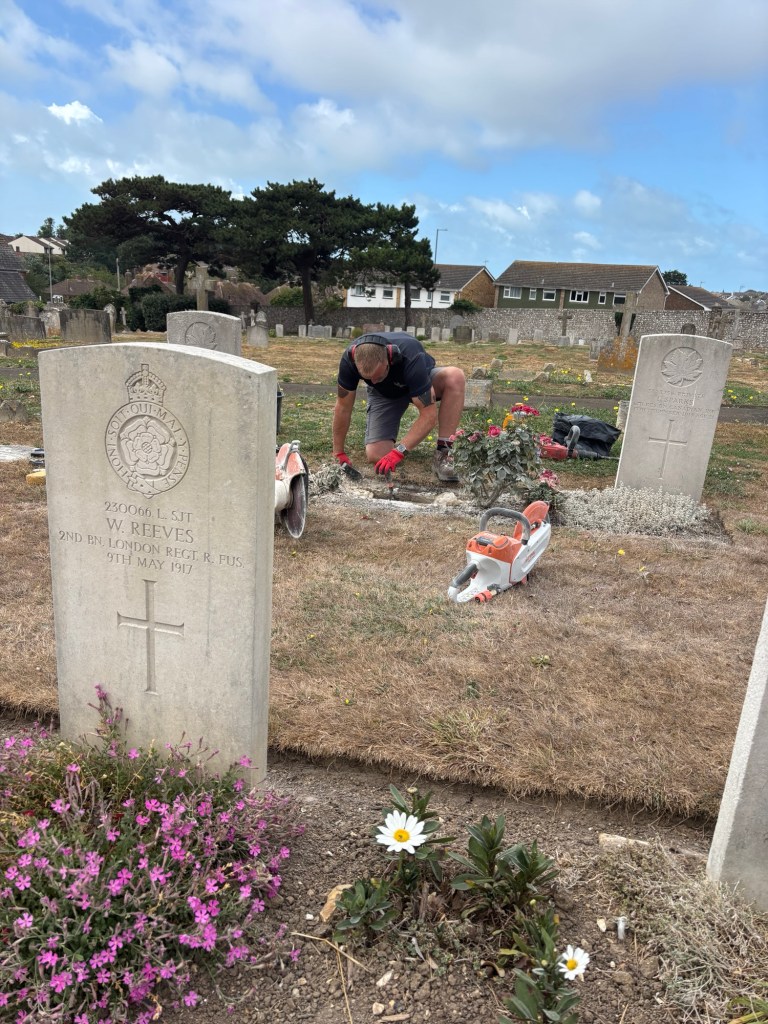
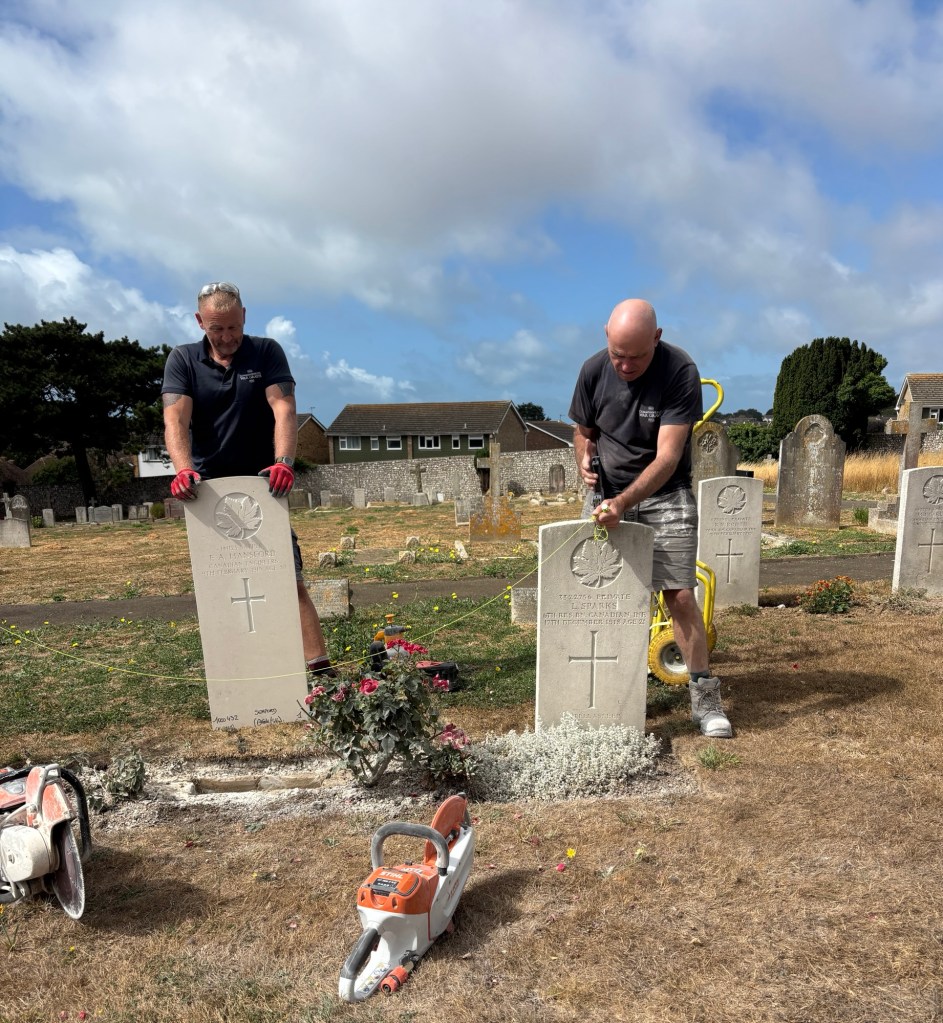
We were fortunate to be invited to witness the process of replacing a couple of the CWGC headstones in Seaford cemetery recently. The care and respect afforded to each grave was quite moving. Below are some photographs showing the maintenance in progress.
The CWGC has created a mobile app called ‘For Evermore’ which can be found here. The app offers a virtual and in-person tour around Seaford cemetery.