
Today is the start of World Space Week. An international event celebrating space. The event this year is focused on living in space.
Have you ever wondered what it would take for humanity to live on the moon? If so why not sign up for the free online event ‘What does it take to live on the Moon?’ where International experts from NASA, Lockheed Martin, UNOOSA, the Deep Space Exploration Lab, and more will discuss missions, technology, policy, and what daily life beyond Earth could look like. The talk will be held on 8th October, tickets are available here.
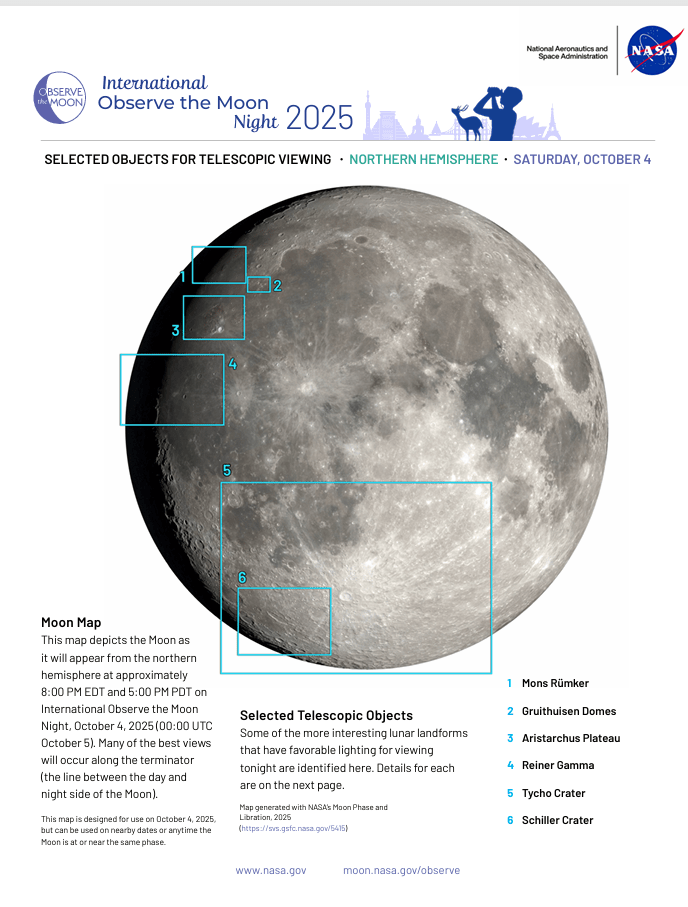
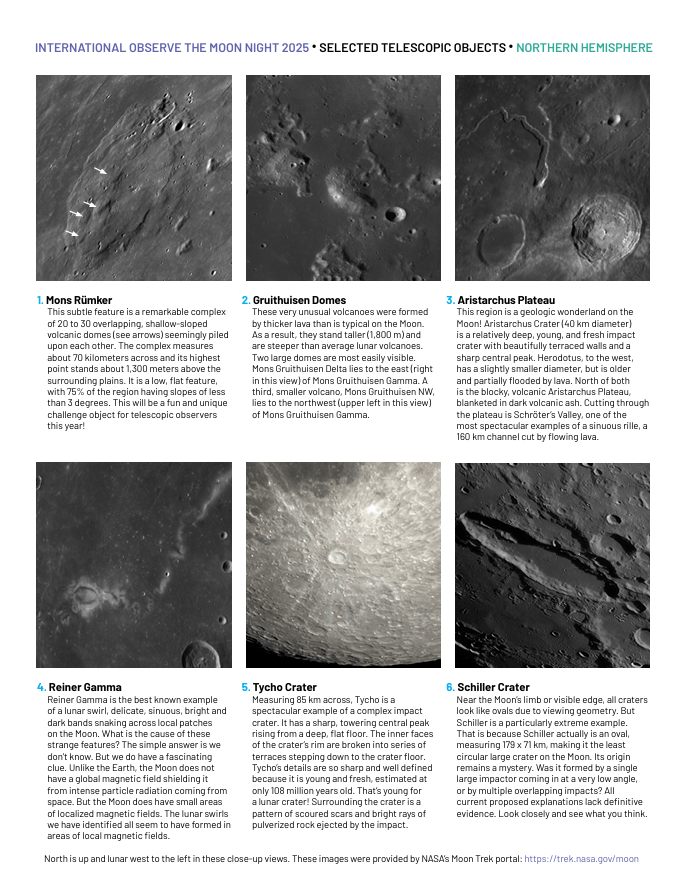
International Observe the Moon Night 4th October
It may be windy outside today but we have clear skies forecast for tonight so we have the perfect opportunity to spend time looking up at the moon.
The moon is our nearest neighbour in the Solar System and was formed about 4.5 billion years ago.This beautiful celestial body is an average of 238,855 miles away from Earth and it takes 1.3 seconds for light to travel from the Moon to Earth. The average time it takes to reach the moon from Earth by rocket is 3 days. However, the New Horizons unmanned spacecraft set a new record by reaching the moon in just 8 hours and 35 minutes on its way to Pluto. As there is no atmosphere on the Moon the dusty footsteps of astronauts who once walked on the Moon are still there today as there is no wind to disturb them.
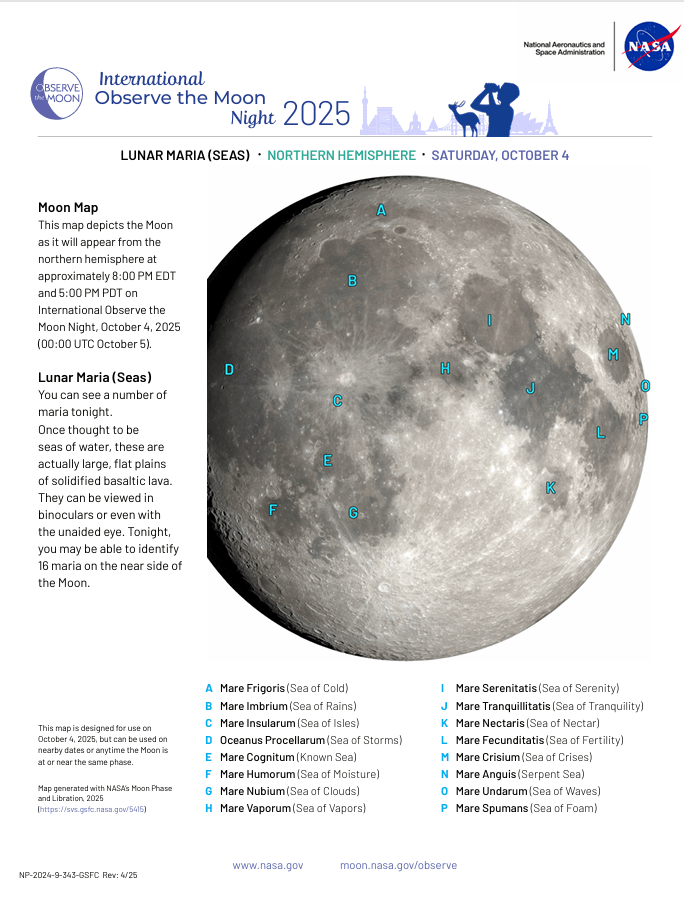
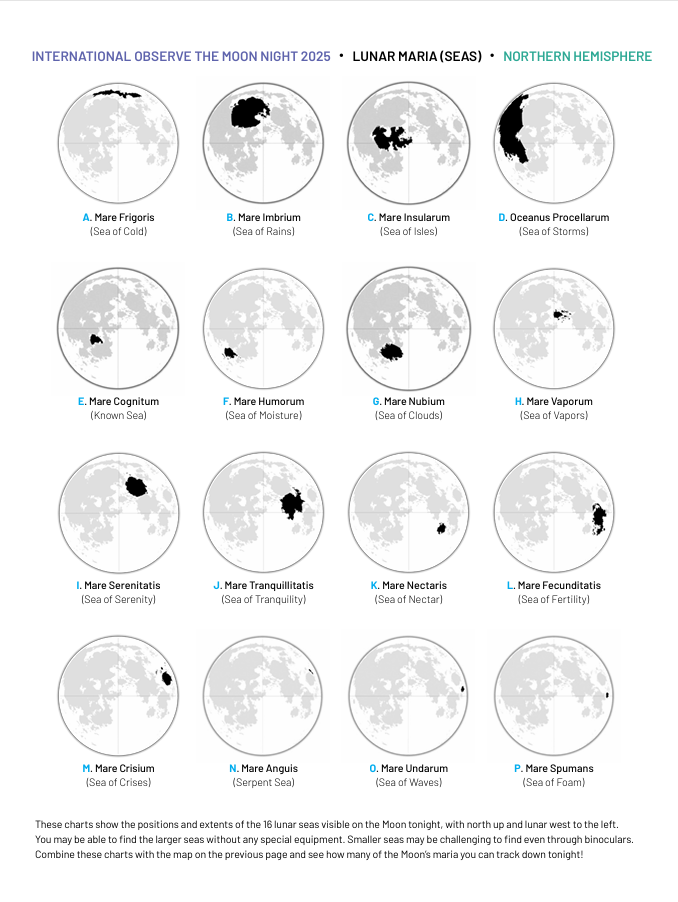
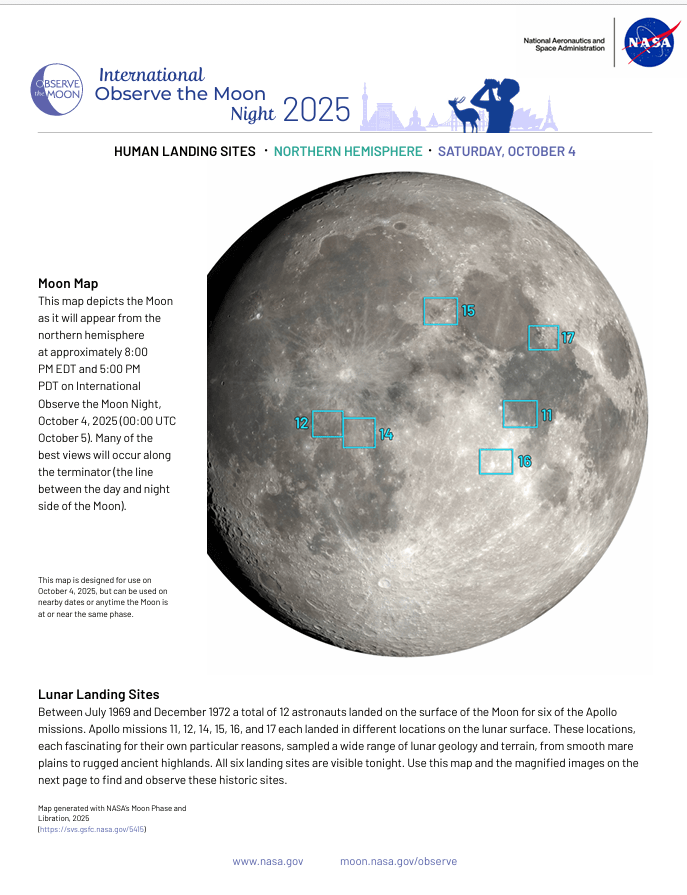
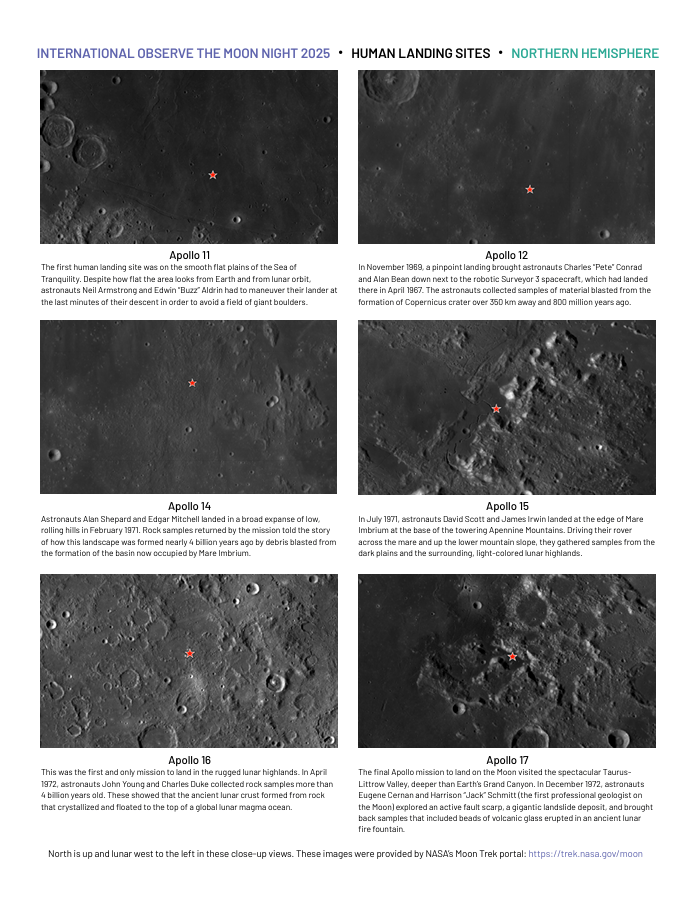
To celebrate International Observe the Moon Night NASA have produced some moon maps to help you identify the features on the moon that you may be able to see through binoculars or a telescope. You can download the maps by clicking here. I have reproduced them below if you don’t want to download them. We are lucky in Seaford to have relatively dark skies, especially on Seaford Head which is part of the South Downs National Park Dark Skies Reserve, so you should be able to get a good view of the moon tonight.
Interesting facts about our Solar System.
- Venus is sometimes called Earth’s twin. It is our nearest planetary neighbour; it is only 2.3 light minutes away from Earth. It is easy to recognise in the night sky as it is the brightest object after our own Moon.
- You have probably heard of the rings of Saturn but do you know it has over 270 moons in its orbit? It is the only planet in our solar system with an average density that is less than water. According to NASA, Saturn could float in a bathtub if a large enough one could be found.
- Jupiter is the largest planet in our solar system. It is so large you would be able to fit 1000 Earths inside it. Jupiter has a radius of 43,440.7 miles which is 11 times that of Earth.
- Mars is one of the most explored bodies in our solar system. There have been several missions that have either orbited, landed on or roved around Mars. On April 19th 2021 an autonomous NASA helicopter called Ingenuity completed the first powered, controlled flight on Mars. It was the first aircraft to achieve powered, controlled flight on another planet, The helicopter completed 72 flights in just under 3 years. Its final flight was on January 18th 2024.
- Mercury is the smallest planet in our solar system and the closest planet to the Sun. It is only slightly larger than our moon. It has a radius of 1,516 miles making it just over a third the width of Earth.
- Uranus was the first planet to be discovered with the aid of a telescope back in 1781. Although it wasn’t recognised as a planet until 2 years later as it was first thought to be a comet or a star. Only one spacecraft has explored Uranus and that was back in January 1986. Having travelled over 1.8 billion miles, over a period of nine years, Voyager 2 had just six hours to gather as much data as possible on this planet as it flew past. Clouds have been detected on Uranus by the Hubble Space Telescope that were almost as large as continents on Earth, such as Europe.
- Neptune is the only planet in the solar system not visible with the naked eye from Earth. Neptune is a cold dark world and is our solar systems windiest world. Winds can whip clouds of frozen methane across the planet at speeds of up to 1200 mph.
- Pluto was only discovered in 1930. It was initially considered to be the ninth planet from the Sun. However, in 2006 the International Astronomical Union reclassified it as a dwarf planet as other objects may cross its orbit. Pluto is a very cold and rocky world containing mountains, valleys, plains, and craters. Its tallest mountains are 6,500 to 9,800 feet high composed of water ice, sometimes with a coating of frozen gases like methane. There are valleys as long as 370 miles and craters as large as 162 miles in diameter. Some of these craters are showing signs of erosion and filling which suggests tectonic forces are slowly resurfacing this dwarf planet.
Would you like to learn more about Space?
Herstmonceux Observatory Science Centre is an amazing place to visit. They have over 100 hands-on science exhibits indoors and outdoors and some of the country’s largest working historic telescopes. There are astronomy exhibitions, courses, podcasts and stargazing evenings. You can find out more by clicking here.
There are many local astronomy groups that hold open evenings where they allow members of the public to look through their telescopes. The Eastbourne Astronomical Society have a list of evenings where you can join them in Eastbourne to view the night sky, details can be found here. The Sussex Sidewalk Astronomers Group are out with their telescopes at every opportunity welcoming the public to take a look through their telescopes. The president of this group is happy to give free talks to groups / schools with the opportunity of viewing the planets and stars visible in the night sky. Their facebook page can be found here. If you are unable to access facebook but would like to contact the president of the group I can pass on your details. The Seven Sisters Astronomy Group is another local group happy to help with advice and giving the public the opportunity to look through a variety of telescopes, their facebook page can be found here. There are many other local groups as well so it is worth reaching out to them if you have an interest in learning more.
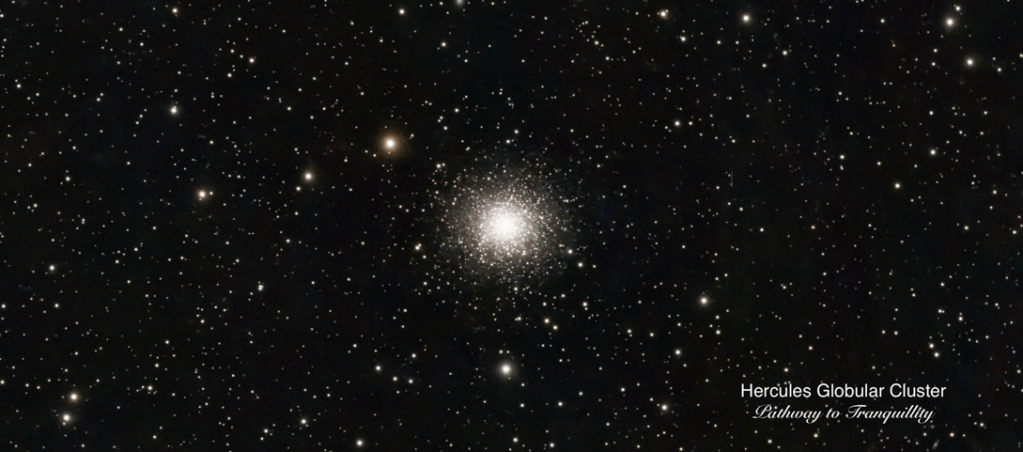
Below are a couple more images of deep sky objects photographed from Seaford.
Happy stargazing

 Celebrating Seaford