What is the connection between sunspots and the Northern Lights? But first a warning:
Never look directly at the sun unless you are wearing protective eyewear, like solar viewing or eclipse glasses.
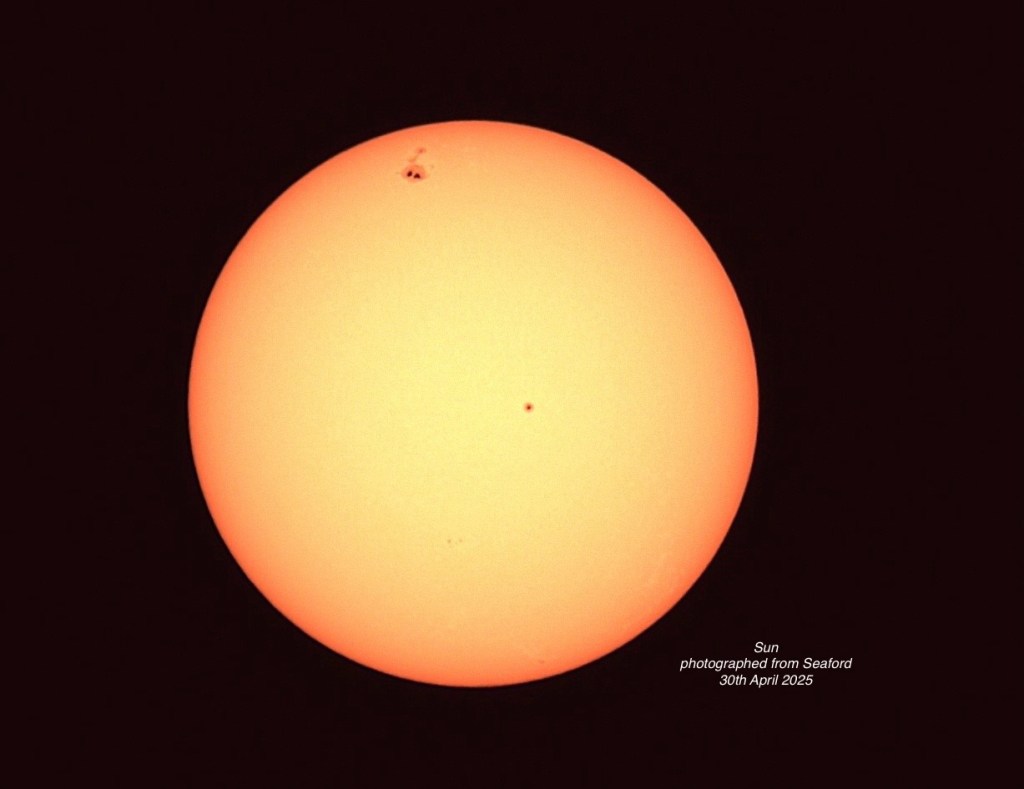
The dark spots as shown on the image of the sun above are called sunspots.
Sunspots are fascinating phenomena that occur on the Sun’s surface. They are temporary regions that appear darker than the surrounding areas because they are cooler. They look like dark patches on the Sun’s surface. They can vary in size, from small spots to large areas that are several times the size of Earth.
Sunspots are cooler than the surrounding areas of the Sun. While the surface of the Sun is around 5,500°C, sunspots can be as cool as 3,500°C.
The intense magnetic activity in sunspots is caused by the Sun’s magnetic field. The Sun is made up of plasma, which is electrically charged gas. This plasma affects the magnetic field lines, causing them to twist, turn, and tangle as the plasma moves. These magnetic snarls prevent heat from flowing to the surface, creating the darker, cooler regions known as sunspots
How do sunspots affect us here on Earth? They can affect solar radiation and can lead to solar flares and coronal mass ejections, which can impact satellite communications and power grids on Earth. When these charged particles from coronal mass ejection interact with Earth’s magnetic field, they can trigger geomagnetic storms. These storms cause the beautiful light displays known as auroras also known as the Northern Lights, which are normally only visible near the polar regions. However, sometimes we are lucky enough to see them above Seaford. So, while sunspots themselves do not directly cause auroras, the solar activity associated with them can lead to the conditions that produce auroras. Hence them being referred to as the footprints of the Northern Lights.
The large sunspot at the top of the picture of the sun above is called 4079 and is currently causing a lot of interest to see what effects it will have. Watch this space as they say!
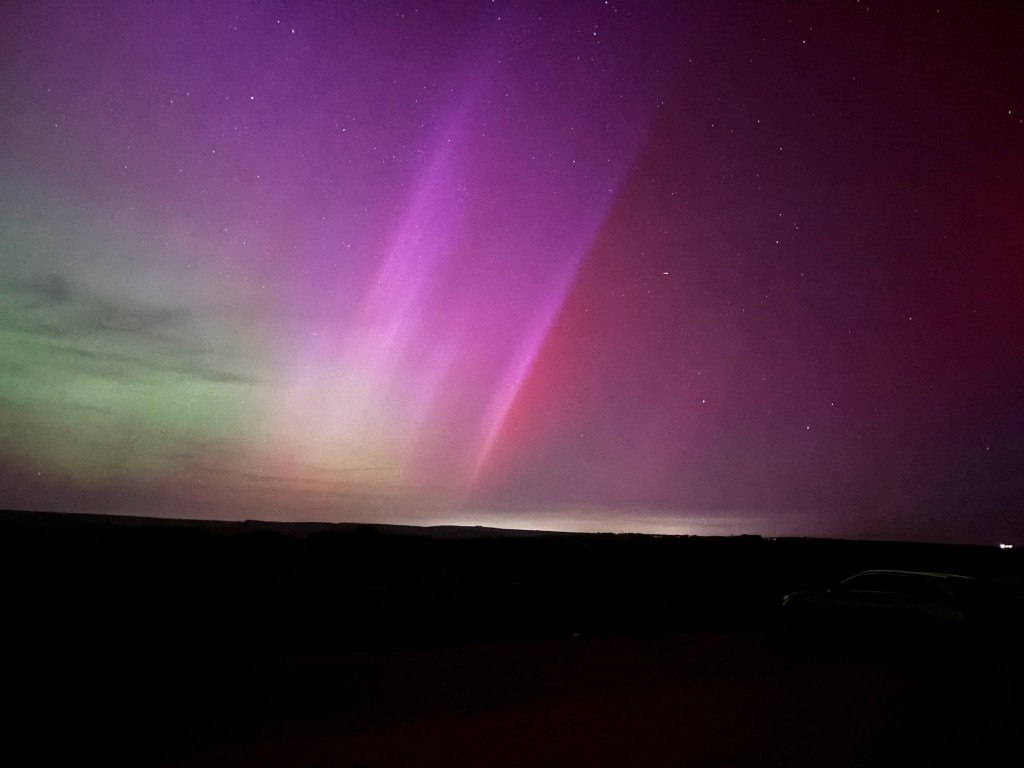
Northern Lights photographed from Seaford Head

 Celebrating Seaford