by Rodney Castleden
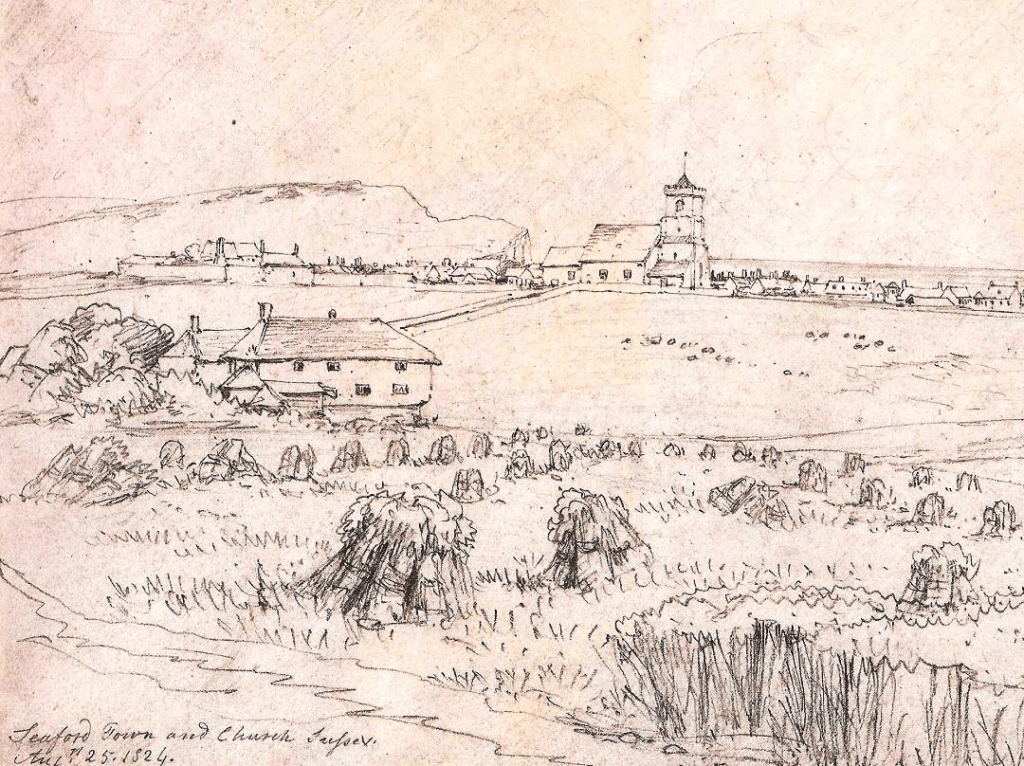
I expect some of you will, like me, be fans of Fiona Bruce and her ‘Fake or Fortune’ programmes. If so, you will perhaps be concerned that in the earlier piece I made the connection between the 1824 pencil drawing of Seaford and John Constable’s visit to Brighton that same year too hastily. Let me have a look at the crucial blank spaces. In ‘Fake of Fortune’ artistic style is important, but not decisive; someone could be copying. Circumstantial evidence is important, but not decisive. The most important thing is provenance. Is there a record of ownership that takes us back to the artist?
In this case, yes, there is. On the back of the drawing, which I didn’t mention before, is a brief note of the early owners of the picture. They are Charles Golding Constable and his wife. Charles was one of John Constable’s sons.
When I was in my teens I drew and painted landscapes, and I saw Constable as the best possible role model. I suppose I still do. I knew his paintings inside out, and copied many of them in order to find out how they were made. One of the things I notice about the Seaford picture is the way the Workhouse and the trees beside it are being lined up to make a major part of the composition of a finished painting. The approach is similar to the treatment of Willy Lott’s house, the distinctive picturesque building on the left hand side of The Hay Wain. The town and Seaford Head would have made up the distant landscape element, and the half-harvested cornfield in the foreground would have been the equivalent of the pond with the wagon in the middle. Constable would have added a spectacular sky and a handful of labourers working in the field. One of them would have worn a red jacket. What a wonderful painting it would have made. If only.
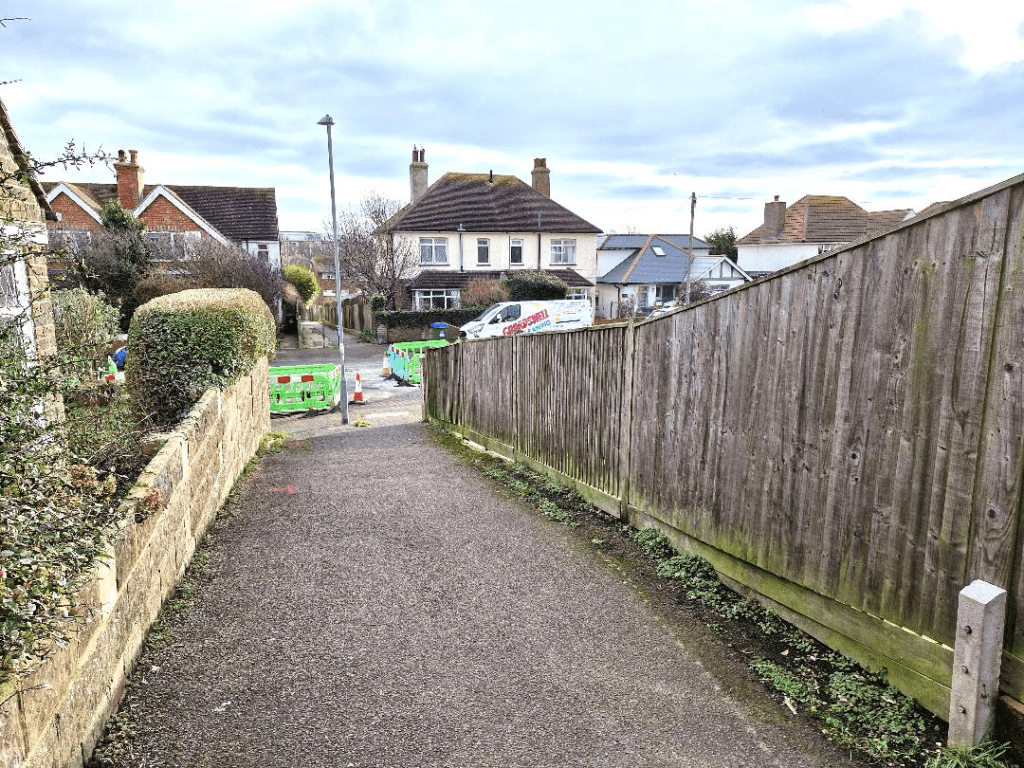
But what would Constable make of today’s Seaford? The photo shows the spot where I think Constable sat to draw his picture. The distant views of Seaford Head and St Leonards Church have gone, and you can’t even see the St James Centre (the Workhouse). It reminds me of the 1890s music hall song;
Oh it really is a werry pretty garden,
And Chingford to the Eastwards could be seen.
Wiv a ladder and some glasses
You could see the ‘Ackney Marshes –
If it wasn’t for the ‘ouses in between.
Would anybody bother to draw this view today, with so many ‘ouses in between? I doubt it. Even so, I can’t help thinking the spot deserves a blue plaque to commemorate John Constable’s visit 200 years ago.

 Celebrating Seaford