Don’t forget this Sunday, 27th October at 1am the clocks go back an hour.
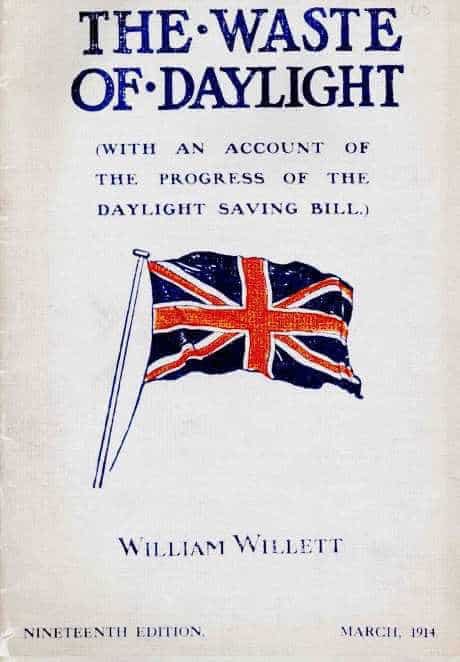
In 1907 William Willett wrote a pamphlet called ‘The Waste of Daylight’ in which he suggested the clocks go forward in April and backwards in September. William’s idea was not taken up immediately even though it had many supporters including Winston Churchill.
However in 1916 an emergency act was passed by the British Parliament during World War One (shortly after a similar one was passed by Germany) to change the clocks as a way to conserve energy by taking advantage of the increased daylight. In 1925 the Summer Time Act was passed by parliament making the changing of the clocks twice a year a permanent arrangement.
During the Second World War British Double Summer Time – two hours in advance of Greenwich Mean Time (GMT) – was temporarily introduced for the period when ordinary daylight saving would be in force. During the winter, clocks were kept one hour in advance of GMT to increase productivity.
In 1972 the British Summer Time Act was passed making the last Sunday in March the time when clocks ‘spring’ forward and the last Sunday in October the time clocks ‘fall’ back. Several attempts to amend or repeal the British Summer Time Act have been brought to the House of Commons in recent years, however currently the UK retains the system first suggested by William Willett.
The UK is not the only country that changes clocks twice a year, 70 countries currently change the clocks in March and October.
With the clocks going back this Sunday you can enjoy an extra hour in bed if you wish 😴.

 Celebrating Seaford