Bob Eade has very kindly shared one of his many blogs. This one focuses on dragonflies and butterflies spotted in Seaford.
Norfolk Comes to Seaford
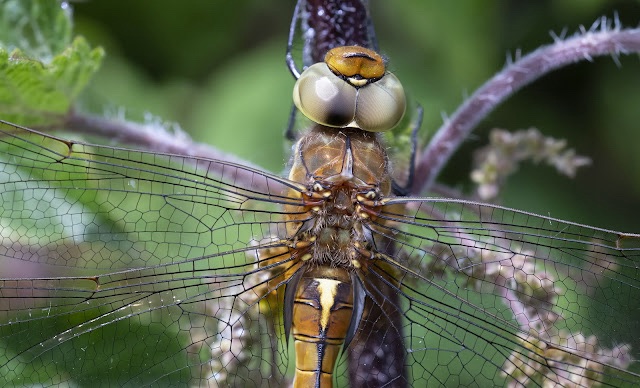
For the 2nd year running, there has been a very big influx of the lovely Norfolk Hawker dragonfly into the area around Seaford.
The first one that I saw this year was on the 23rd May, in nearby Friston Forest. In fact, most of my sightings this year were in that forest, but similar to last year, there were also sightings on the downland at the back of the town.

A whole month later, Friston Forest was alive with this dragonfly, with most of the rides holding a few maturing dragonflies. Similar to other dragonflies, the Norfolk Hawker will leave the breeding ditches just after emerging from their nymph stages, into the dragonfly that we see flying around, until they are fully mature, at which time they will return to the ditches to breed.
By the time they have reached full maturity, the eyes will have turned a brilliant green colour. This gives the dragonfly, its alternative name of the Green-eyed Hawker.
On the 26th June, I saw around 20 of these impressive dragonflies in Friston Forest. Very few settled, but after a very long wait, one did eventually stop and rest in an area that I could photograph it.

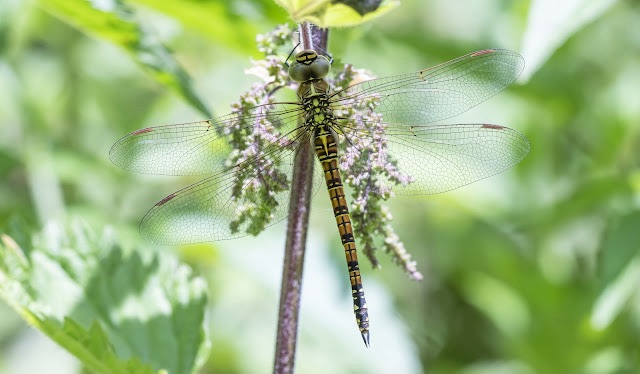
Another species that is colonising the area is the Southern Migrant Hawker. Instead of green eyes, this one when mature has vivid blue eyes. Not surprisingly, this one has the alternative name, Blue-eyed Hawker!! Once again, this species spends time in local woodland and hedgerows until they are fully mature. This is a smaller species than the Norfolk Hawker.
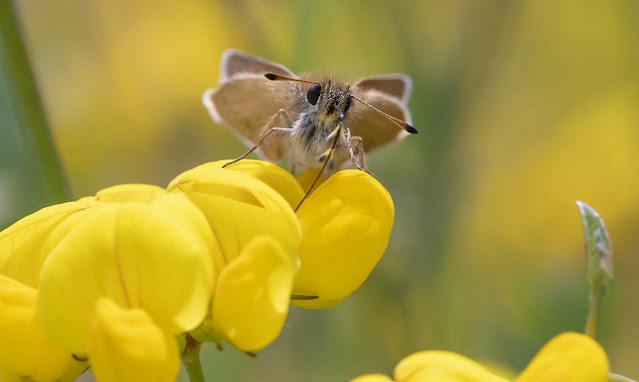
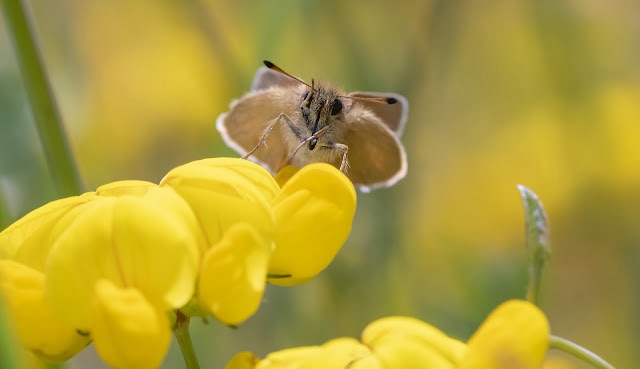
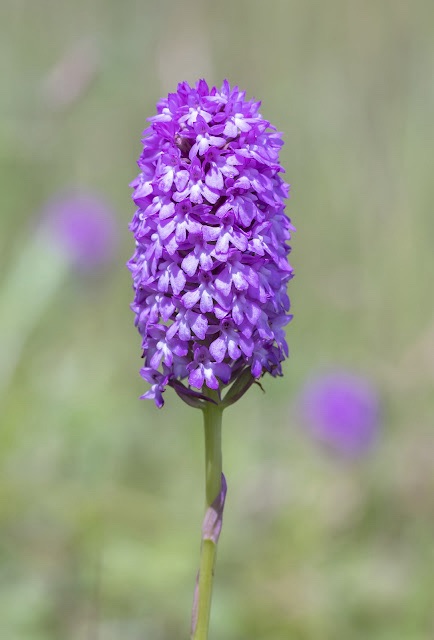
On the butterfly front, another East Anglian named species, the Essex Skipper have been quite numerous on the Seaford downland. This species is very similar to the more common Small Skipper. They are best told apart from the very evident black tips to the antennae, when seen from the front of the butterfly. I photographed one recently on Bird’s-foot Trefoil, from the angle that shows this off. After looking at the images I noticed that this individual had picked up some pollinia from the abundant Pyramidal Orchids. The pollinia was certainly causing issues for the butterfly as it was trying to clean the pollinia from its proboscis.
Currently on the downs at the back of Seaford, the Chalkhill Blue butterflies are flying in large numbers. They emerge from their pupae during mid July to mid August. Whilst surveying the area I recently found a male Chalkhill Blue that had yet to fly. It had crawled up a small grass stem and was expanding its wings when I found him.
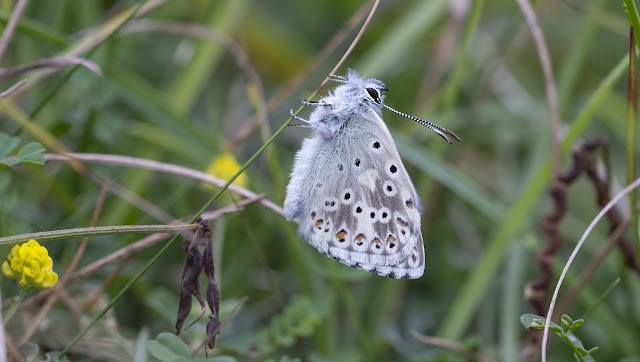
It is quite easy finding mating pairs of Chalkhill Blues as well, as often the female is intercepted by a male as she emerges, and often they are joined together before she has even flown.
The female Chalkhill Blue is brown, so quite different from the pale milky blue that the male is on the top wing.

🦋🦋🦋🦋 You can find more of Bob’s blogs at http://bobsbutterflies.blogspot.com/ Having subscribed to Bob’s blogs I would recommend it, the photos are stunning and it’s interesting following Bob’s travels. 🦋🦋🦋🦋

 Celebrating Seaford