Whilst wandering along the path on Seaford Head towards the coastguard cottages I came across a strange pile of earth with a little hole in the middle.
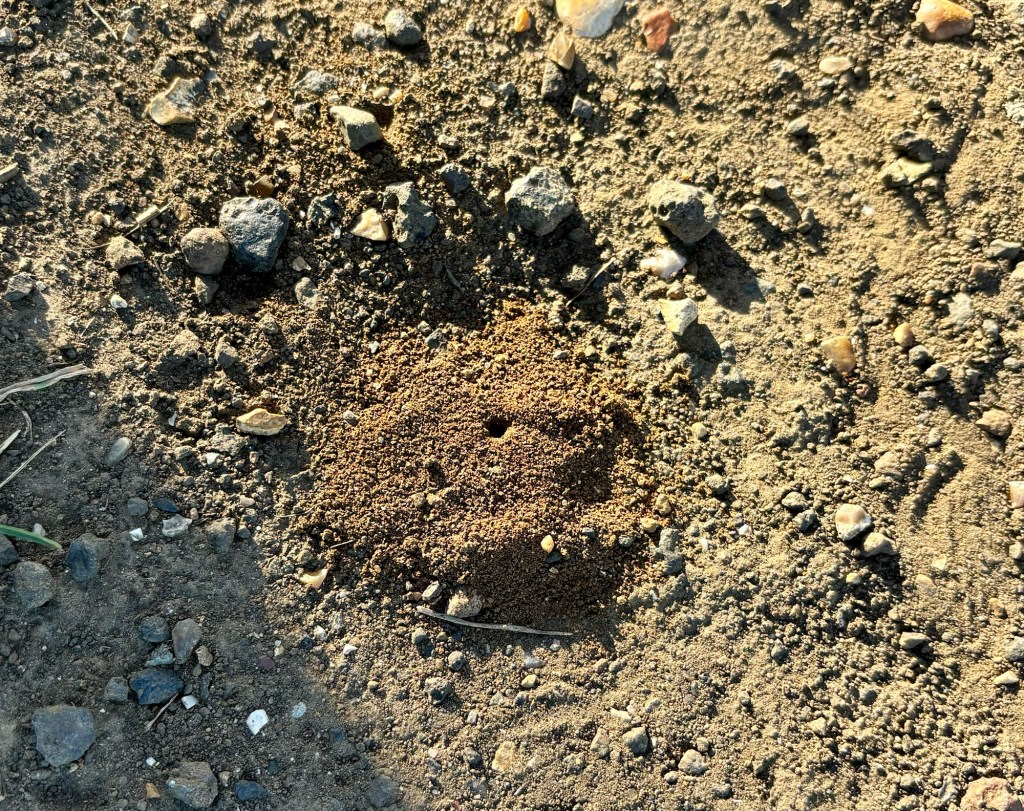
I pondered over this little pile of earth wondering what creature had worked so hard to create it. It obviously wasn’t ants. Whatever was causing it wasn’t worried about being disturbed as it was in the middle of the path that so many walkers and their dogs traipse along every day.
Defeated by this enigmatic little mound I resorted to emailing Michael Blencowe, naturalist, author, wildlife guide and a thoroughly nice person. Michael assured me it was not some hiker emptying soil out of his hiking boot but was made by a solitary bee.
A solitary bee is different from the honey bees. It doesn’t produce honey and it doesn’t live in a hive. It lives alone. Having said that solitary bees often live close to one another so I don’t need to worry about a lonely bee upon Seaford Head. I did notice a fair few similar mounds in the close vicinity.
The female solitary bee builds the nest by herself using her body to dig out a tunnel which splits into different chambers where she can lay her eggs.
I don’t know which species of solitary bee created the mounds I saw. However I do know miner bees, like the one below seen near Seaford Head, are ground nesting solitary bees and create little nests like these.
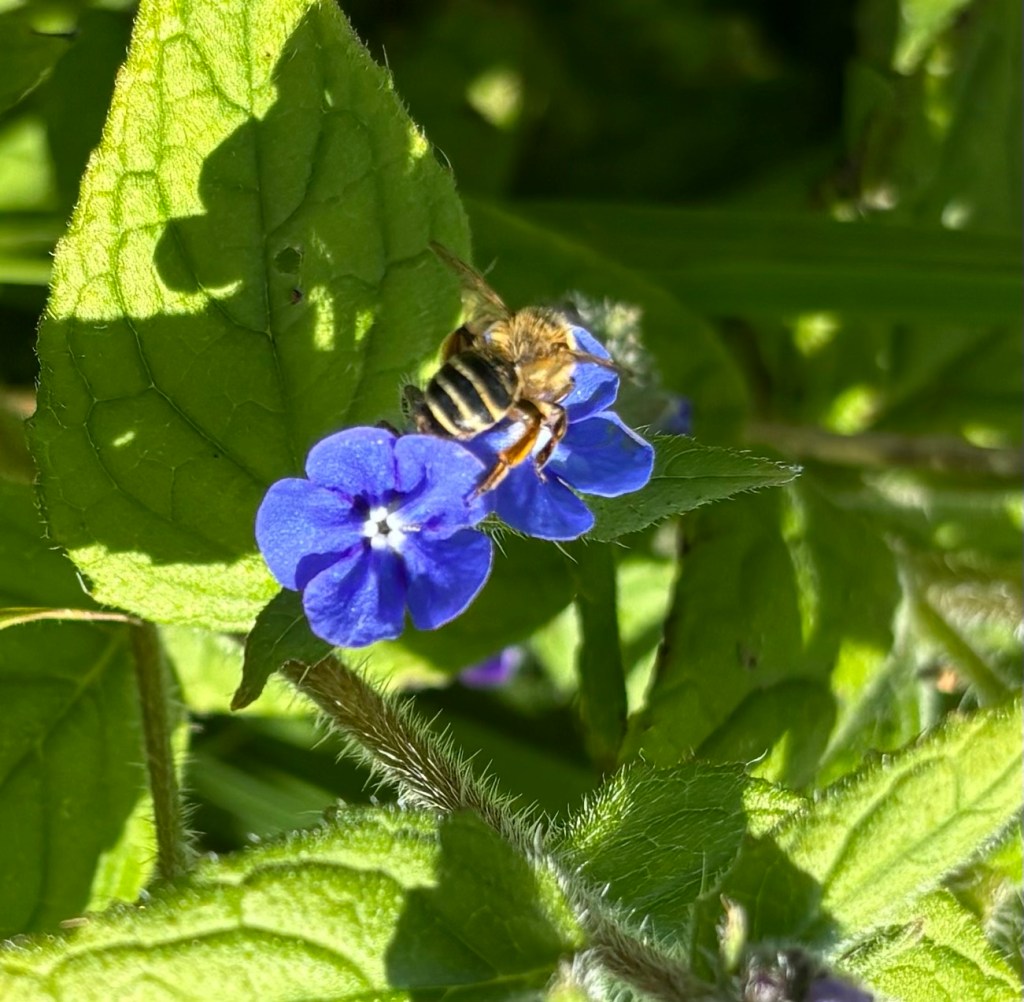
Solitary bees may not produce honey but they work very hard to pollinate crops, flowers and trees.
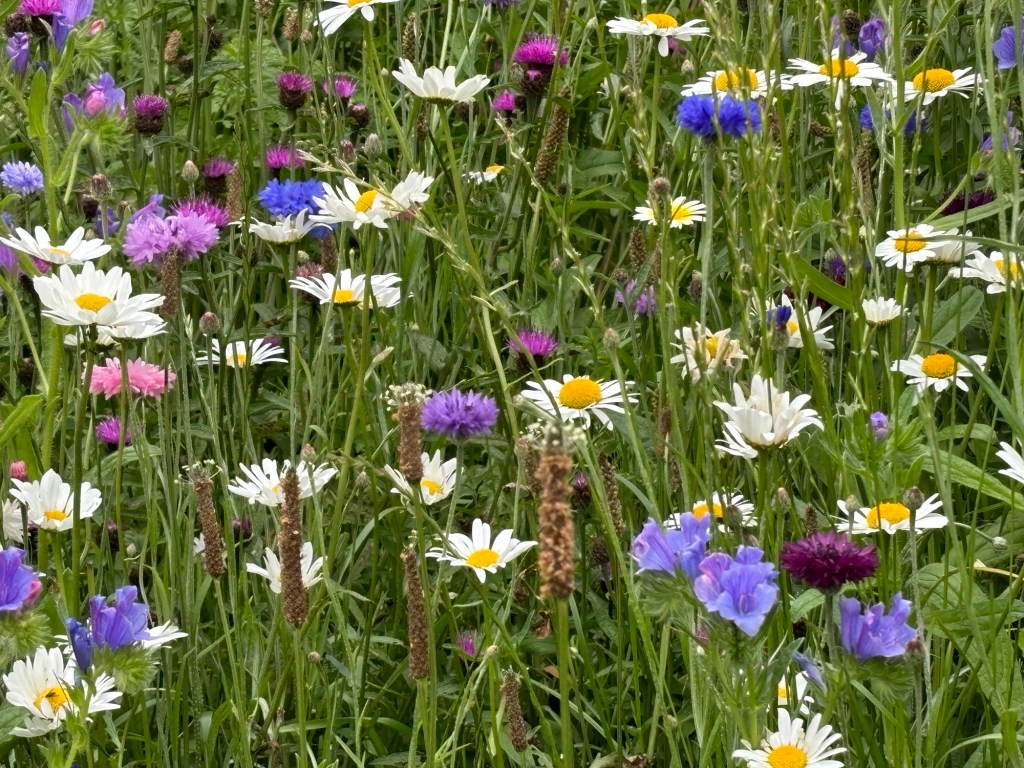
There are about 250 different species of solitary bee in Great Britain and some of them have the most wonderful names like the hairy-footed bumble bee, the orange-legged furrow bee and the gold fringed mason bee.
Solitary bees don’t have a monopoly of these idiosyncratic names. Below are a couple of social bees photographed near Seaford Head.
A buff-tailed bumble bee busy in a garden.
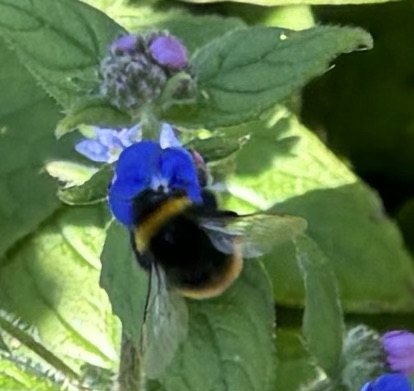
A white tailed bumble bee
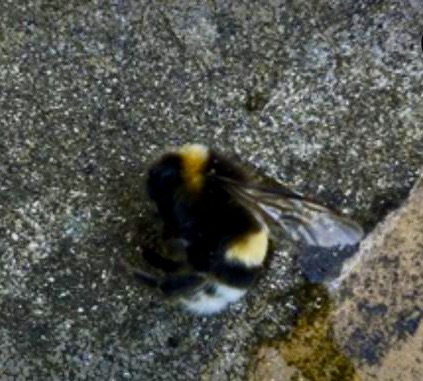
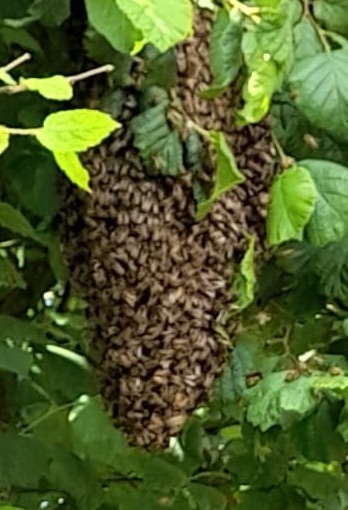
You may see at this time of year a swarm of honey bees, like the example below photographed near Seaford Head earlier today. Bees swarm when they subdivide their colony into two groups to reproduce and find new habitats. They leave their hive and find somewhere to hang in a cluster until the scout bees decide on their new home.
If you come across a swarm of honey bees and are too worried to leave them where they are, you can call a local bee keeper who may be able to come out and collect the swarm.
The other bee we are extremely lucky to have on Seaford Head is the Potter Flower Bee. These can be found on a short section of the cliffs at Hope Gap. The Potter Flower bee can only be found in two other locations in Great Britain, a small area of coastline on the Isle of Wight and at Purbeck in Dorset.
If you are interested in photographing and identifying the bees you see you may be interested in reading the blog ‘Biodiversity – let’s put Seaford on the Map’ which explains which apps you can use to help with identification.

 Celebrating Seaford